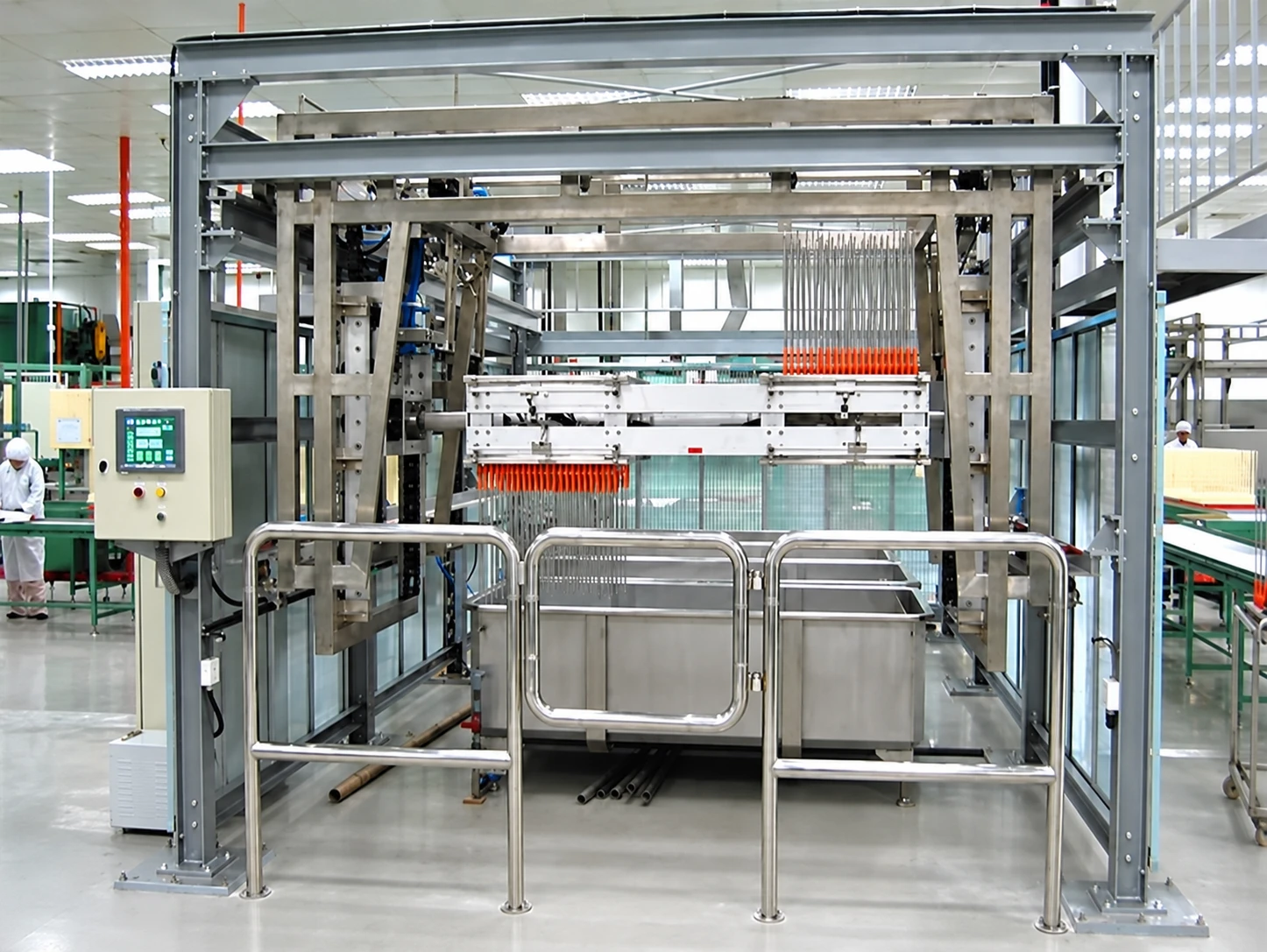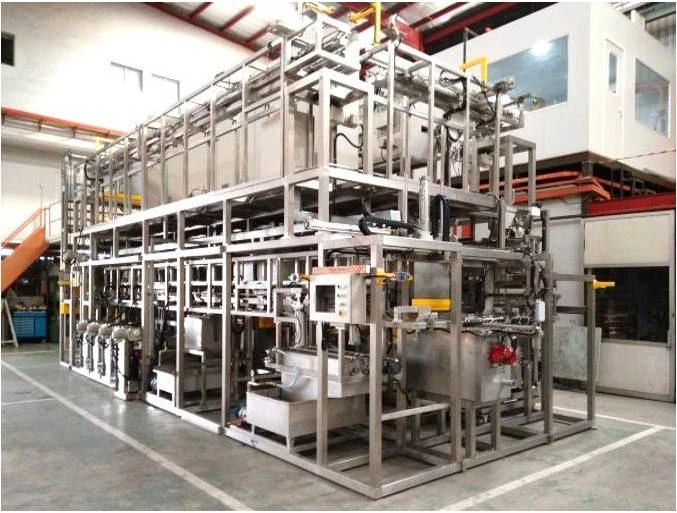
Dipping Type Overview
How It Works

Input Detection
Sensors and field devices detect product position, machine status, cycle completion, and operating conditions across the line.

Command Processing
PLC, HMI, and control systems interpret incoming signals and determine the next sequence of actions based on programmed logic.

Movement Coordination
Conveyors, transfer units, lifts, robots, or manipulators move products between stations with controlled timing and positioning.

Machine Synchronisation
Multiple machines are linked to operate in sequence, allowing each stage to respond to upstream and downstream conditions in real time.

Process Monitoring
The system monitors cycle status, alarms, fault conditions, and operating data to maintain production stability and visibility.

Safety Control
Interlocks, emergency stops, guarding, and access control functions help protect operators and equipment during operation.

Feedback & Optimisation
Operating data can be used to fine-tune cycle time, reduce stoppages, improve response speed, and support long-term process optimisation.
Typical Problems Solved
Process Highlights
ESG & Energy Efficiency
- Smarter equipment usage: run machines, motors, and transfer systems only when required through controlled logic and sequencing.
- Lower production waste : improve repeatability and reduce errors caused by inconsistent manual handling or mistimed operations.
- Resource efficiency : support better use of labour, equipment, and floor space through more streamlined and controlled production flow.
FAQs
What is an automation system used for?
Can automation be added to an existing production line?
What types of equipment can be connected to the system?
Is full automation necessary for every factory?
What are the main benefits of automation?
Need a Reliable Engineering Partner?
Share your requirements and we will recommend the best-fit solution.